

10 Creative Journaling Ideas for Beginners
My creative journal is my ultimate escape from the micro-managing boss, full inbox and ever-growing list of errands that I’m always chasing to finish.
It’s my little space to take a deep breath, let my imagination roam wild and create something that doesn’t even have to look good.
I’ve been journaling since my teens and I’ve gone through various different phases: from writing emotional outpourings in thick, college-ruled spiral notebooks to Morning Pages to (most recently) affirmation journaling because I’ve been needing a confidence boost.
But sometimes I just don’t feel like writing. Whether I’m too exhausted to formulate a phrase or don’t really have much to say, sometimes a traditional journal entry feels like a Sisyphean task with my impossibly heavy Moleskine.
And that’s when I pull out my creative journal.
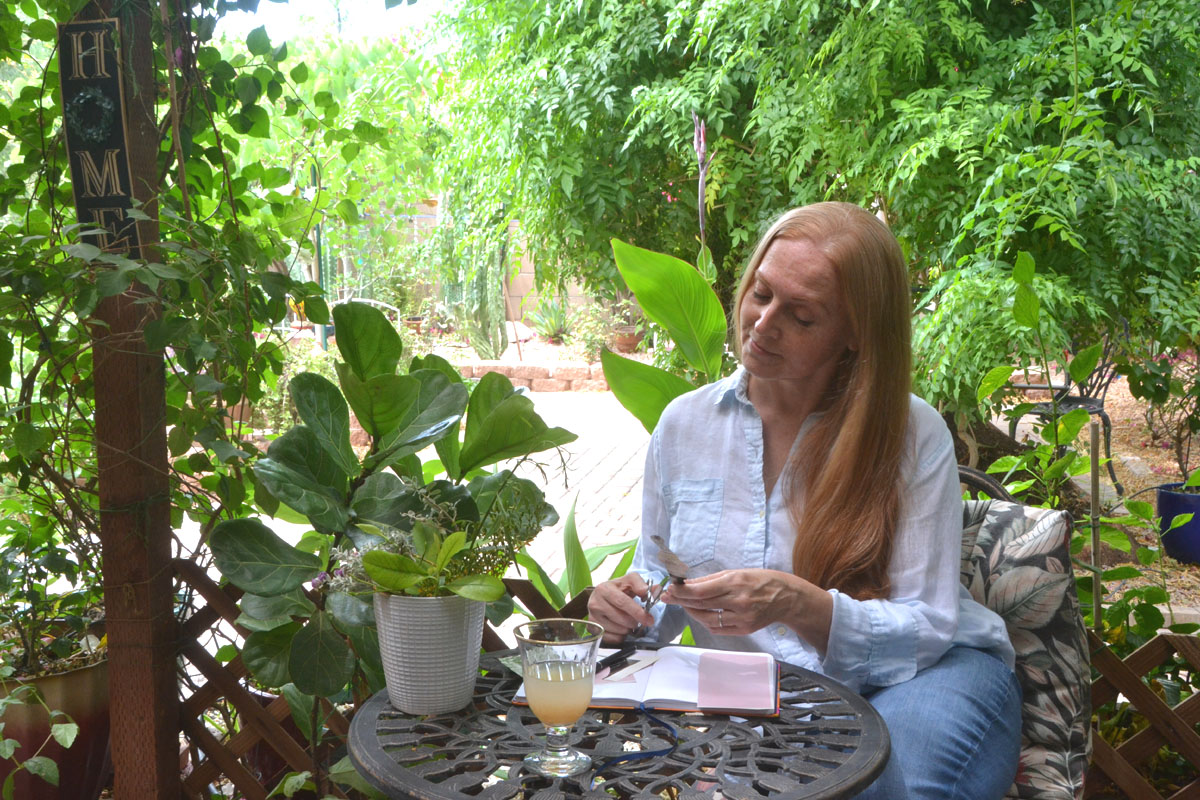

I light a sandalwood-scented candle and put on my comforting Ella Fitzgerald playlist. I dig out my wooden cigar box stuffed with colored pencils, watercolor tubes and magazine cuttings.
And I let my intuition guide me. I cut out a red silhouette of a 1920s flapper from a discarded library book and I paint a blue background filled with stars. I add pressed creosote leaves to add texture, and it’s finished whenever I feel like it’s finished.
The creative journal did its job. It gave me a respite from my daily life – and made me feel (almost instantly) giddily happy.
When the creative journal fills, I stash it in a pile with all my other old notebooks at the bottom of my closet.
And I don’t look at them again very often. But that doesn’t mean they were pointless. They were tools just like the old toothbrushes you’ve used throughout your life that helped you prevent cavities but didn’t need to be shown to your friends and social media followers.
That kind of private world – where you create art for art’s sake – is especially important now, when we spend an eye-watering amount of hours online in an increasingly performative culture.
What is a creative journal?
Think of it as part traditional “dear diary” style writing and part artists sketchbook.
A creative journal combines traditional writing with elements like doodling, watercolor and collaging.
It combines words, images, textures and colors – and gives you free space to experiment with ideas or just to kick back and doodle along with a podcast.
A creative journal is a testing ground for your art supplies, a meditative space to rest, a playground for new ideas, a scrapbook to document your daily life and a place to gather your favorite quotes, song lyrics and recipes.
The best notebooks for a creative journaling
I’d say the best notebook to start a creative journal is whatever notebook you already have. You don’t need a professional leather-bound sketchbook or a hand-bound journal with silver trinkets.
Start with a cheap and easy notebook that you won’t be intimidated to fill with half-baked ideas and sloppy sketches.
Here are some notebooks to consider:
- Spiral-bound notebooks are great if you want to do single-page creative journaling. But if you’re doing a centerfold style journal entry that stretches across two pages, keep in mind that the spiral binding will break up the journal entry.
- Blank notebooks are my favorite for creative journaling. Though when I want to write a lot of text, I draw in my own lines (with a pencil and ruler) to keep my text straight.
- Lined notebooks are a great option if you go heavier on the writing and lighter on the artwork.
- Dotted notebooks are often a good compromise. They help keep your writing straight and give you plenty of white space for artwork.
Essential creative journaling supplies
- Adhesives like glue sticks, tape and thread.
- Art supplies like colored pencils, pens, ink, markers, pastels, wax crayons, watercolors and gouache (for more solid blocks of color). It’s best to experiment with a few different mediums and find whatever feels most effortless.
- Images from old used books, magazines, newspapers, brochures and flyers. Collect anything visually interesting that comes across your path, from a vibrant business card to a restaurant menu. Save them in a box to flip through as you’re journaling.
- Stationery like colorful envelopes, washi tape, stickers and stamps. I love to collect these items while I’m traveling from local bookshops and stationers in the cities I’m visiting – they make the best souvenirs.
- Textured, patterned or colored paper from gift wrapping, packaging and wrappers.
- Printed text from old books, magazines and newspapers.
- Ephemera like pressed leaves and flowers, stickers from grocery produce, sketches, notes, string and anything else that could possibly fit onto the pages of a journal.
- Everyday items like maps, postcards, subway tickets and boarding passes, cinema stubs, photos, postage stamps, greeting cards and envelopes.
Where to find inspiration
I love to scroll Pinterest and Instagram for ideas. But I’m also careful because too much time scrolling often leaves me comparing my own journal to others.
Remember that comparison is the thief of joy.
Scroll for ideas, but don’t be afraid to improvise and just see where the page takes you.
What to write in a creative journal
That first blank page can be intimidating, especially if you don’t consider yourself very creative.
Here are some creative journaling prompts and ideas to get inspired.
1. Create low-pressure scribbles. Make a quick sketch of 3 things you’re grateful for. Sketch the scene in front of you. Make a drawing using one long, continuous line without lifting your pen. Make a doodle with markers then spray the page with water to create unique shapes. Keep it fun and don’t make it perfect.
2. Give yourself a challenge. Creativity thrives on limitations, so set a specific task for yourself with rules. Make an entire drawing using only one color. Draw 10 flowers (or trees or still lifes) in 10 days. Make an entire drawing using only one shape (circles, triangles, etc).
3. Document your days. Use your creative journal as a gathering place to collect cafe receipts, grocery store ads, business cards and anything else you come across in your daily life.
4. Get in touch with nature. Use your journal to gather pressed leaves and flowers. Sketch some of your local landscapes. Write about how the seasons change.
5. Follow your intuition. I love to pull out my box of art supplies and magazine cutouts and just see where the mood takes me. I try not to overthink and I let myself play with color combinations, textures and images.
6. Manifest your future. Make mini vision boards for the upcoming weeks and months. Fill an entire page with a single color and write across it a series of inspiring quotes.
7. Experiment with art supplies. Ever worked with oil pastels? Pick up a box and make a simple sketch of a vase filled with flowers. Browse the clearance section of your favorite crafts store to stock up on low-pressure art supplies that you wouldn’t normally consider.
8. Get nostalgic. Make a list of your favorite childhood movies, memories or road trips. Create simple sketches and collages around those themes.
9. Make visual lists. Doodle small everyday things that make you happy (like coffee or reading in the garden) to create your very own visual dopamine menu. List three destinations you’ve always wanted to visit or three hobbies you’ve always wanted to try, then make a sketch or collage to illustrate your lists.
10. Turn studying into a hobby. Do a deep dive into a subject you’ve always been interested in (whether that’s the history of golf or Italian cuisine). Use your creative journal to make notes and sketches as you learn more about the subject.
Keep it low pressure
You don’t need leather-bound journals and Winsor & Newton watercolors to start a creative journal. You don’t need to create aesthetic collages with high-end oil pastels.
Start with anything!
Whenever I get intimidated by a blank journal page, I often tell myself: “This is literally a $2 journal you picked up on clearance at CVS Pharmacy. It’s ok to “spoil” it!”
Because if you can’t be free on a piece of paper, then where can you?
Read next:
36 Ideas To Start An Art Journal (Even If You Can’t Draw)
10 Ways To Live A More Analog (And Satisfying) Life
700+ Journal Prompts To Heal, Grow & Discover Yourself
Reclaim your life from the digital noise.
Join my one-day Analog Workshop to get practical resources and interactive sessions to help you close the screen, defeat distraction and design an intentional life.
